In what ways does your media product use, develop or challenge forms and conventions of real media products
MUSIC VIDEO
We made sure our music video fitted not only the conventions of a real music video, but a real rap music video. Goodwin's Music Video Theory highlights the 5 key elements of a music video; lyrical meaning, relationship between the song and visuals, technical aspect and the star image. In general, these are the main aspects to a music video.
These aspects are therefore expected in a rap music video where they usually have upbeat music, the rapper starring in the video; having links with the song; and lyrical meanings. I believe there are 2 sides of rap music videos as they differ from artist to artist. Some artists are more about the money, girls and sex side, with strong slang and swear words, whereas others are more lyrical and meaningful - we chose this pathway and conformed to the elements these types of rap music have. Overall, in our music video, we conformed to most conventions such as the length of a song, including the artist, a narrative and meaningful lyrics. Although we challenged forms and conventions of the other side of rap music videos, such as rapping about money and women, we still had elements of these such as swearing and slang words (e.g. 'F*cked' and 'Skrr').
TEXT & TITLES
Most rap/hip-hop music videos have a type of text usually at the start of their music videos. We used a production label called 'G5 Production', which we created ourselves, as we saw a lot of music videos that had a production label across the screen before the song started as well as the name of the song. I believe this creates a better music video because if it were to be on TV, the audience will know what the song is called and who it is by - key information to a music video. For example -
Dej Loaf - Try Me
These aspects are therefore expected in a rap music video where they usually have upbeat music, the rapper starring in the video; having links with the song; and lyrical meanings. I believe there are 2 sides of rap music videos as they differ from artist to artist. Some artists are more about the money, girls and sex side, with strong slang and swear words, whereas others are more lyrical and meaningful - we chose this pathway and conformed to the elements these types of rap music have. Overall, in our music video, we conformed to most conventions such as the length of a song, including the artist, a narrative and meaningful lyrics. Although we challenged forms and conventions of the other side of rap music videos, such as rapping about money and women, we still had elements of these such as swearing and slang words (e.g. 'F*cked' and 'Skrr').
Here are the examples of the elements that used and developed forms and conventions of real music videos in our music video:
TEXT & TITLES
Most rap/hip-hop music videos have a type of text usually at the start of their music videos. We used a production label called 'G5 Production', which we created ourselves, as we saw a lot of music videos that had a production label across the screen before the song started as well as the name of the song. I believe this creates a better music video because if it were to be on TV, the audience will know what the song is called and who it is by - key information to a music video. For example -
Dej Loaf - Try Me
Big Sean ft. Kanye West - All Your Fault
The title being a faded red, in our music video, emphasises the idea of fear and realisation. Because the colour red is associated with violence, anger and danger, which our artist may have elements of but the fact that it is faded tries to deteriorate this stereotype of black people, fighting racism with a slight anger. The song is mainly about teenagers being involved in gangs at such a young age which could put themselves in danger and that they need to realise that there is more to life than just drugs and violence.
ARTIST/PROTAGONIST
Our music video alternated between the artist of our song and the narrative, with a different character. Although they were two completely different people, which was because we wanted to show a variety of black people - conveying the idea of 'black lives matter' that they are not alone, they shared similar characteristics to each other as well as conventional characters in rap music videos. Here are stills of both our artist and protagonist with comparisons with each other and real artists:
Artist -

Protagonist -

Similarities to each other:
- Wearing all black clothing - with hooded jackets, conforms to the typical young, street look.
- Both black young teenagers - to make the visuals match with the sound, conforming to Goodwin's theory.
Differences to each other:
- The protagonist expresses emotions through facial expressions and actions whereas the artist expresses emotions through lyrics and speech.
Similarities to real rap artists:

(Kendrick Lamar)

(Kanye West)
- These artists both mainly wear black and white - simple but stylish fashion sense.
- They rap about similar topics such as corruption and racism.
Differences to real rap artists:

(Tyga)
- Not all rap artists are the same as each artist have different styles - most people would think rap/hip-hop artists wear big chains and gold jewellery; we wanted to avoid this stereotype to highlight the diversity of black artists and go down the route of meaningful rap music.
Rap/hip-hip music videos generally have some sort of narrative running along the music. We definitely needed a narrative because through our research into audience opinions, such as the blog post 'Research: Audience Focus Group', we found people prefer it when music videos have a story line that they can understand and want to keep watching, almost like a short film. I also personally enjoy music videos more when they have a narrative, especially when it suits the lyrics of the song. Sometimes, songs are known just for their music videos or it makes a song better/worse, so it is very important it has meaning and an element that can be remembered for.
In our post 'Planning: Storyboard, Still Frames', we showed our separate storyboards of our narrative, artist scenes and them two combined, in chronological order.
(Narrative Plan)

I think having this plan allowed us to have a structure, a practical structure in terms of structuring our filming days and in our music video. As we were able to see how many scenes we had to film, we were able to plan what scenes to film and on what days.
Our narrative starts with the protagonist falling, we chose to have this as a start because I believe it makes the audience feel curious as to what has happened, therefore deciding to continue watching. We then see him walking down the street seeing a racist poster that he tears down to convey that racism is still in occurrence. He catches 2 people beating someone up and does nothing but walks on. He is then involved in drug dealing which eventually gets him shot, explaining the beginning of the video, and the cycle restarts. The restart shows that it is not only one life that this happens to, racism, drug dealing and gangs are issues that has not yet been solved. The aim of the video was to inspire people to avoid getting themselves in trouble like this because it leads to danger, suffering and death.
Some rap music videos that have good, meaningful narratives include:
Drake - Hold On, We're Going Home
- His girlfriend is kidnapped and throughout the video, he needs to find her, using his weapons and friends' help. It also includes flashbacks of their relationship. It relates to the title as he is singing to her, giving her faith with Drake saying just hold on, we're going home'.
Lil Wayne - How To Love
- The start shows the woman wanting to have an abortion then refusing last minute. Throughout the video, it shows a flashback of her hard life with her partner who physically abused her in front of her daughter and then shows her daughter's life who grows up to be like her mum; living as a stripper and then finding out she is HIV positive. The video then rewinds to the start and shows a different life if the mother was a better influence. It then ends with showing her daughter living a better life because she was taught 'how to love'.
TECHNICAL ASPECTS (CAMERA SHOTS/ANGLES)
'The Fourth Wall'
Every music video has different technical aspects to convey different themes of their songs. Generally, an aspect to distinct a film and music video is 'breaking the fourth wall'. This is when the artist looks directly at the camera and sings. We used this in our music video to create a direct contact between our artist and the audience because I think the lyrics to 'Dear Lana' is very powerful, touching on issues such as corruption in institutions and drugs. Having contact with the artist allows the audience to understand the lyrics more which then makes them more meaningful.
(Due to copyright restrictions I was not able to make a GIF from real music videos, so I took still images instead)
Rick Ross - Push It

J Cole - Work Out

First Person Camera
We found first person camera very interesting in music videos and wanted to incorporate it in our own. There were only a few videos we found and I thought because we challenged the typical rap songs, the money, sex and bling side, we should include this unique camera shot.
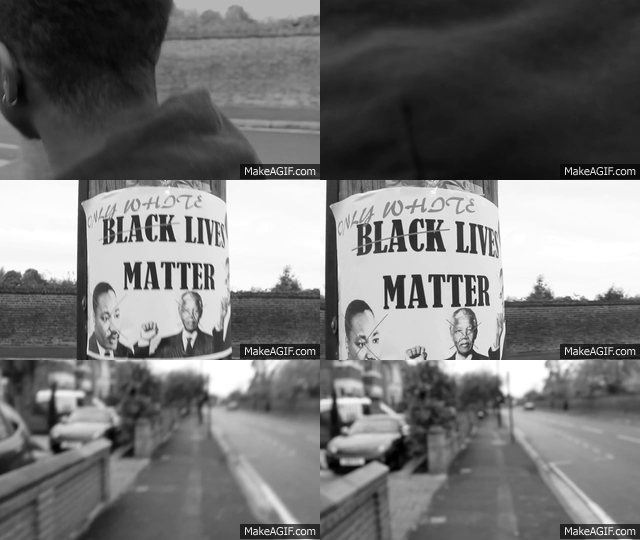
Our purpose of the music video was to get a message across and keep the audience intrigued in the video. What's a better way of doing that, than putting the audience in the protagonists' shoes? Real music videos have also done this, for example:
Kanye West - All Falls Down
This video incorporates a first person camera view throughout the whole video. When I first watched it, I was very impressed with the technological skills used, especially with the transition bit from 2:10-2:14, and I will never understand how the camera is not seen even when Kanye looks at himself in the mirror.
Visuals
We made our music video black and white throughout the whole thing, except the artist scenes of a purple background, because it creates a mysterious, subtle but serious mood. I found that a few rap music videos also have black and white videos, for example:
Big Sean - Blessings
Jaden Smith - Hello
Kendrick Lamar - Alright
From this music video, Kendrick Lamar - Alright, we were also inspired by the way the police shot Kendrick at the end (5:47-5:53). We decided to add this element in our music video too:

ANCILLARY TEXTS (DIGIPAK/MAGAZINE ADVERT)

No comments:
Post a Comment